What if we stopped treating literacy as just reading words on a page and started viewing it as an operating system for daily life?
Every year, International Literacy Day invites us to measure progress in global education. However, global conversations around literacy have fundamentally shifted – moving beyond basic reading and writing toward functional, digital, financial, and climate literacy. In 2026, navigating modern challenges requires skills that allow individuals to translate critical information into informed, real-world action.
ASSIST believes that true literacy must function as an active decision-making framework for real life. Knowing how to read words isn’t enough if people struggle to apply those concepts when facing economic, social, or environmental challenges. That is why our core goal is to innovate on lifelong literacy by making educational content engaging, interactive, collaborative, memorable, and sticky – moving learning out of passive instruction and into hands-on experience.
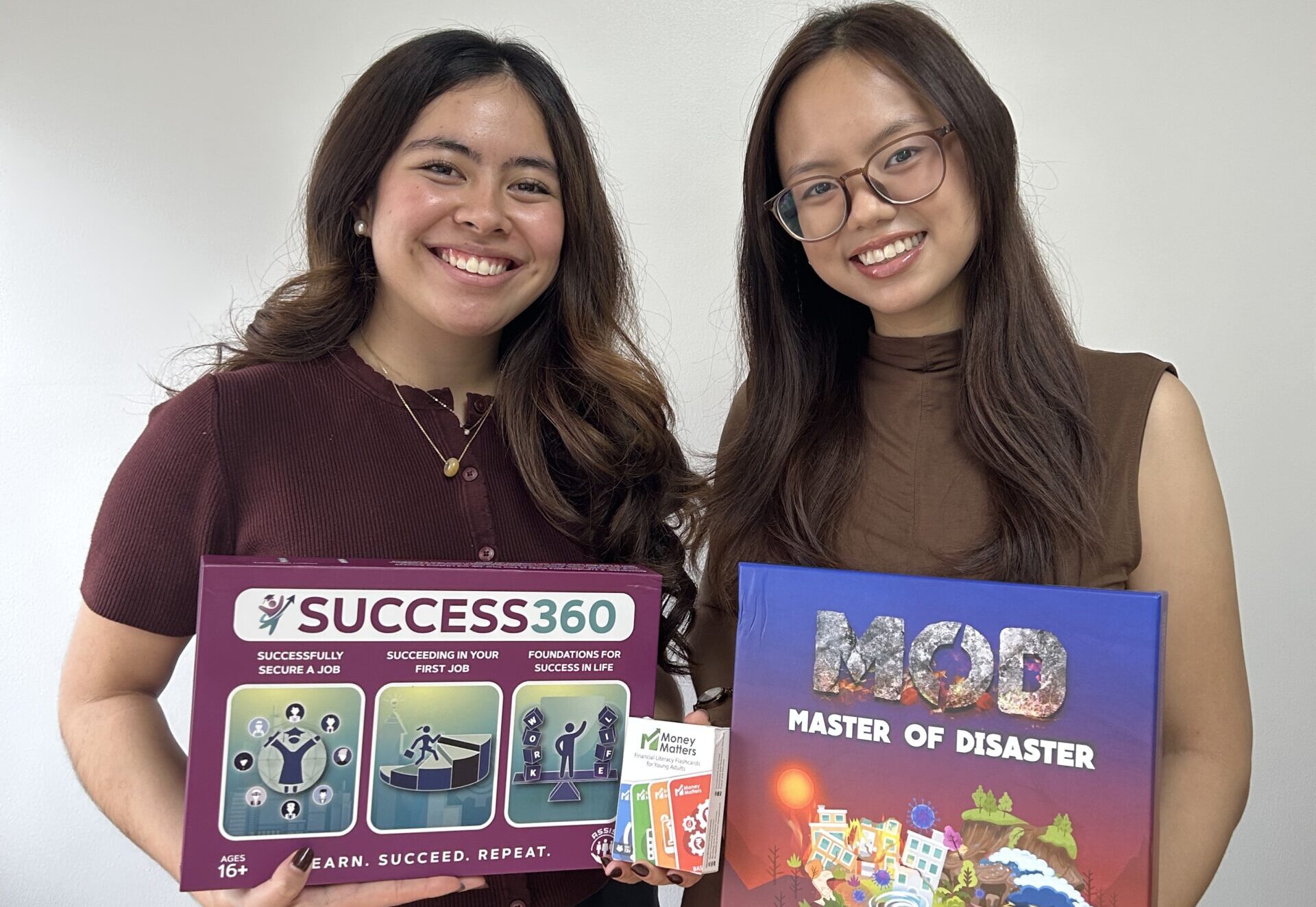
To see what this looks like in practice, we spoke with Rhyanna Ilagan (Senior Associate for Product Development, Strategy & Innovation) and Bea Leana Hernandez (Partnerships Associate), two people shaping the frontlines of ASSIST’s interactive toolkits.
On the creation side, Rhyanna oversees the journey of our learning tools from initial market research to final printing, crafting board games and flashcards built around active recall and practical decision-making.
Rhyanna’s team turns complex concepts into tangible experiences – taking board games and flashcards from initial ideation and market research all the way to execution and printing, ensuring every tool emphasizes active recall and scenario-based decision-making. At the same time, Bea bridges the gap between design and delivery, building multi-sector partnerships with government agencies, schools, and private organizations to bring flagship products like Master of Disaster, Success360, Money Matters, and the upcoming I2CAN directly into communities.
Their work creates low-stakes spaces where learners don’t just study literacy concepts—they practice real-world skills, test ideas, make mistakes, and build lasting confidence.
Read below to join in the conversation.
As September ushers in World Literacy Day, UNESCO is calling on public and private sector leaders to push for improved literacy rates and digital preparedness. An excerpt from UNESCO states: “Literacy is essential for acquiring broader sets of knowledge, skills, attitudes, values, and competencies in different areas, be it media and information literacy, financial literacy, technical and vocational skills, health, political and social sciences, environmental science, citizenship, education, and culture. Literacy opens the door for many of these functional skills.”
How does this perspective align with the product suite you work on?
Rhyanna: As the world evolves, [literacy] is not only learning through pen and paper anymore, and it’s not just reading and writing and comprehending. Literacy shifts to not just being a subject, but becomes an operating system. And that’s why ASSIST pushes for those products.
The purpose of the games is to be able to learn and make mistakes in a safe environment. It prepares them to create decisions when the time comes. Through practicing or playing the game, there’s recall, there’s a behavioral change. With our products, people learn about how to care for our money, safety in terms of different disasters, career, and just being a citizen in this world. They get to practice it. Our products act like a supporting role where literacy becomes a tool to navigate life.
From your experience on the ground, how does interactive learning help bridge literacy gaps for both adults and kids in ways traditional classroom training can’t?
Bea: It’s not the basic classroom training of disaster preparedness that we have. It’s a gamified approach, as Rhyanna has mentioned. It’s also a more engaging approach. Typically, when students learn about disaster in the classroom, it’s with a teacher, and there’s a blackboard, and there’s a screen in front of them. But with MOD, it allows them to engage more and be an active participant in the discussion.
We also see how reading out loud works. One rollout that was especially memorable for me was when we had adults that struggled reading the cards out loud. We realized that it may be because they were out of school, or they were studying during the pandemic when there wasn’t an emphasis on reading out loud. So that’s the importance of having this avenue for interaction. The games allow them to practice that.
How do language and cultural localization play a role in making these tools accessible to diverse communities?
Bea: Most of our products are in English, so we’re working on other versions that include the dialects of the country, like Bisaya. And also we’re working on a Taglish version for MOD to make it more accessible to learners. We also received a lot of feedback requesting for the language to be simpler, so that kids would understand it better and that they don’t have to rely on the facilitator or their teachers to read it and to play it.
Rhyanna: Currently, our India office is already using our updated version of Master of Disaster. They’re also trying to localize it. Meaning, if it’s typhoons or floods, it’s cyclones in India. We’re making it more relatable and contextual. We also are going to roll out a Vietnamese version so that more and more people are going to be educated on disaster preparedness.
What does active learning look like in practice, and how do these tools ensure knowledge stays with participants after the game ends?
Rhyanna: With just using pen and paper, learning can be sort of passive. But if we play through the games and practice different decision-making, it becomes active. It changes behavior.
Somebody who’s going to start their career could actually practice how to make resumes, or practice how to answer more wisely, or be more prepared, in an interview. They can prepare themselves when they’re starting their own financial journey. Our products don’t necessarily just teach you what to do in different life situations, they help you practice making decisions.
And when you play it with your schoolmates, your colleagues, or other community members, you’re deciding as a group. Meaning learning happens through discussion or disagreement. You learn through these exchanges. It forces you to navigate different situations in a community so, when the time comes – especially with MOD – you know how to help each other. So that’s how the games also allow you to be a social citizen.
Bea: What’s unique with how MOD is distributed is it is always integrated into a program. It’s more than just turning over the game board units to the schools or to the communities, but also teaching them how to play it. It’s about training them to become “Masters of Disaster” themselves so that, in the future, they can also share that knowledge with others. Students would share it with their classmates, friends, and neighbors.
That’s how these tools make learning stick. In the case of MOD, participants are empowered to become agents of disaster preparedness in their community.
Can you walk us through ASSIST’s flagship product suite and how each tool addresses a different area of life skills?
Master of Disaster (MOD)
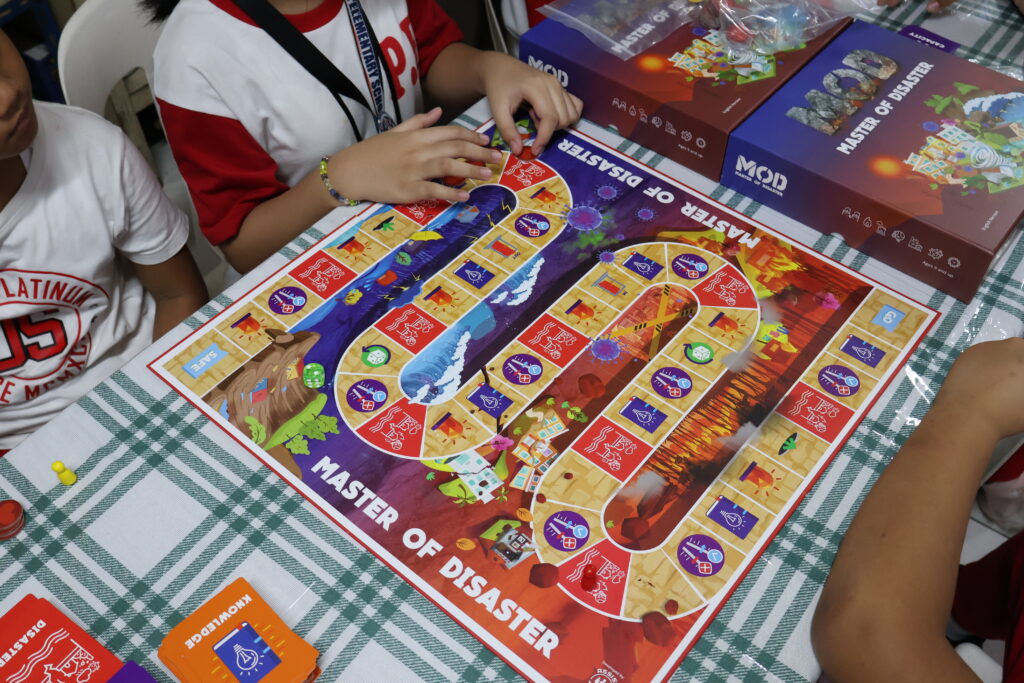
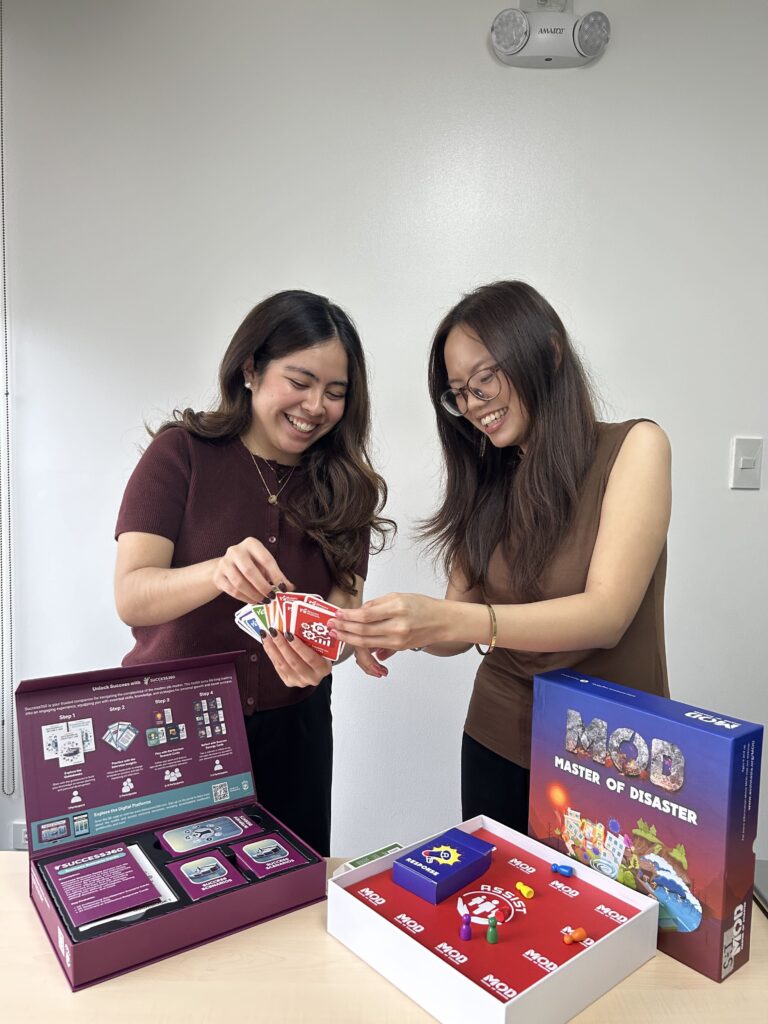
Bea: Master of Disaster is a gamified approach to disaster preparedness. Community members and private sector partners typically use it for their business continuity measures. They also roll it out to disaster-prone areas. Following the rollout of over 1,000 units in 2025 alone, active distribution continues this year.
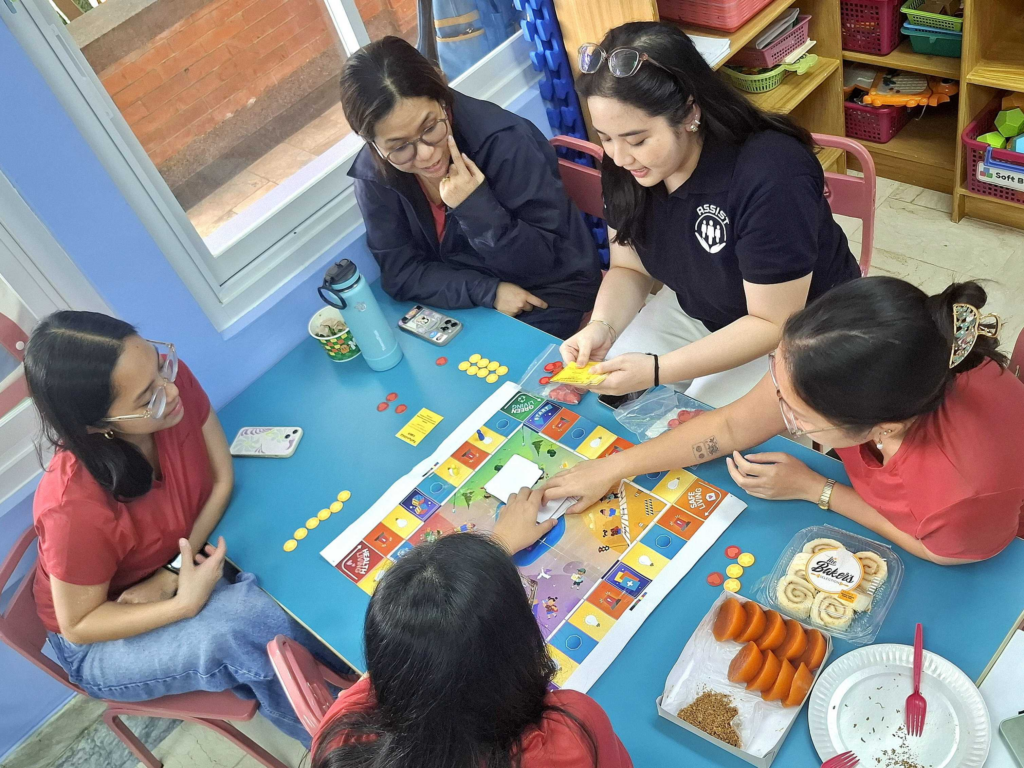
It’s played like a combination of Monopoly, Charades, Snakes and Ladders, even Trivial Pursuit. It’s a board with tiles and cards. It’s normally played by 2-6 players. Players roll the dice and the tile you land on corresponds to a card. So if you get a disaster, you have to respond to the disaster. We also have knowledge cards that have the Q&A, and Act It Out, which adds to the learning of the participants.
When people learn that it’s a board game approach, they get excited. They really see the value in MOD and how it’s very accessible to members of the community, students, and also employees. Offices would typically have really rigorous training when it comes to disaster preparedness and disaster resilience. But adding MOD is a way for them to get excited about these programs.
Success360
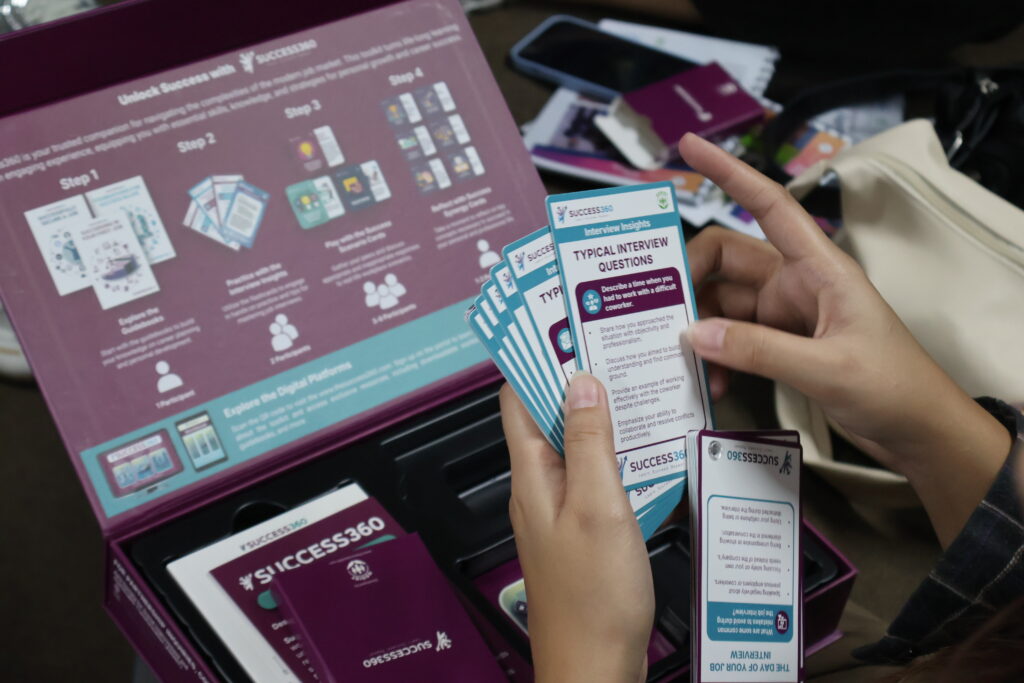
Rhyanna: Success360 is about learning, succeeding, and then repeating all of this knowledge, to help you in succeeding in your first job, securing a job, and also be successful in different aspects of your job. In the box, there are three guidebooks and one online workbook. We also have one interview insights material, a scenario deck, and a success synergy deck.
Success360 teaches you to navigate career planning and personal development as well as practice different interview scenarios. Then we have success scenario cards that guides you in coping with your boss and other workplace challenges. And then, lastly, we have success synergy cards that give you a space to reflect and learn the different concepts that are important to succeed, not just with your work, but also with your personal life.
This is perfect for college students or those first-time job seekers. We also roll it out to different companies, teaching participants to navigate different career journeys and career options.
Money Matters
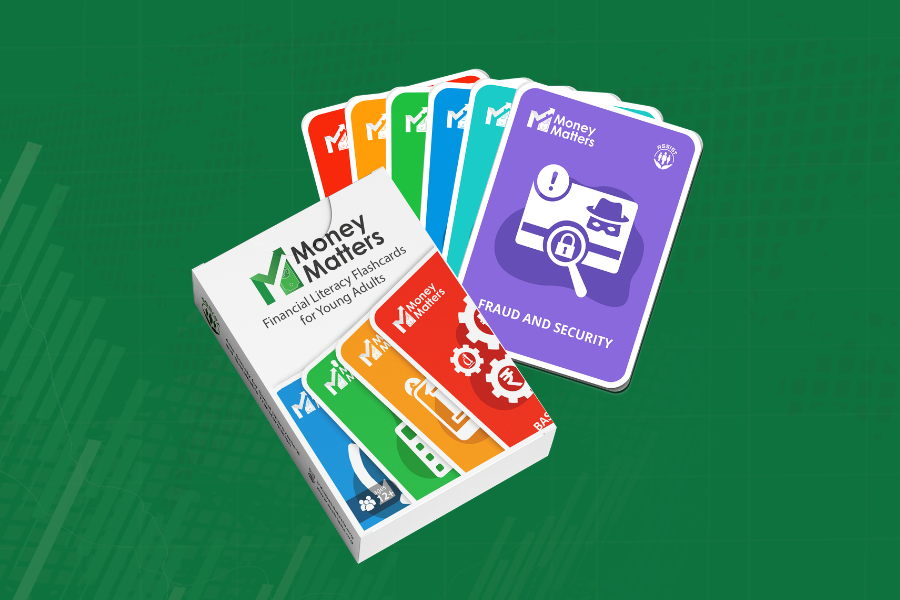
Rhyanna: Money Matters is a financial literacy flashcard for young adults. This is perfect for those in Senior High school, first-time job seekers, or those who are just opening their first bank accounts. The goal here is to educate and engage people on the basics of financial literacy.
In the Philippines, most people are not necessarily knowledgeable about investments, credit scores, etc. This game teaches a regular Filipino how to open a bank account and learn financial concepts. It also helps them with budgeting, debt management, investments, taxes, different insurance options, fraud and security, and even how to plan for retirement.
I2Can
Rhyanna: i2Can is an educational board game currently in development. This is perfect for youth ages 7 and up. The name I2Can has a double meaning: “I too can” be a good citizen, friend, child, and student—while the “2” stands for Inspire and Ignite.
This game educates young learners in navigating life in different thematic areas: green living, healthy living, safe living, and ethical living. In this game, they learn to navigate different decision-making or scenarios like saving the environment, waste management, and starting a healthy lifestyle. They learn about food groups, meal planning, and mental health, along with safety across roads, natural disasters, home, school, community, and online environments. And lastly, with ethical living, they learn how to be a good friend, a good son or daughter, and a good community member.
The format is perfect for this age range. We put them in simple scenarios to avoid overly complex decision-making. Our main goal with i2Can isn’t for them to win, but for them to learn what to do in different real-life situations.
Building on this focus on foundational life skills, we are expanding our work on mental health with a dedicated knowledge product currently in development, set for release in early 2027.
Could you share a memorable story from the ground that highlights the real-world impact of these games?
Bea: I especially like when the parents play it. We rolled out the MOD recently to scholars, and their parents were also in attendance. The parents had their own play group. In the beginning, they were hesitant to play. They were like, “Oh, this is just for kids,” and “It’s complicated to play.” Parents don’t normally have the patience to learn game mechanics.
But once they get going, they start to enjoy it. They begin helping others in different scenarios since, with MOD, we really encourage people to save themselves first and then others, to get a hero token. After the game, they would say, “Wow, this will really be helpful for our home. Now we can create an emergency plan.” And that’s what I like when rolling out MOD.
Talk about the partnerships aspect. What makes interactive toolkits a worthwhile investment for LGUs and corporate CSR partners?
Bea: Aside from the fact that these are IEC materials, I think local government units and also agencies like DILG really see the value in MOD.
We just had National Disaster Month. The DILG distributed 33 MOD units to different LGUs in Metro Manila because they understand how MOD can help LGUs get started in disaster preparedness. And whenever we also meet with different DRRMOs in the cities, they also have MODs in their offices handy so that their interns and guests can play MOD. It’s a fun and engaging way to not only break the ice, but also to learn about disaster, even in events that you don’t normally learn about disasters.
On the corporate side, we normally participate in business continuity and risk management training programs. Whenever offices have their business continuity week, they would always include MOD and ask us to set up a booth in their office. During their Safety Week events, partners invite us to train their employees to play MOD, while also procuring game units to donate to a community or school of their choice. Their employees also volunteer to facilitate these MOD sessions with students. I believe that’s why they keep repurchasing and why they keep going back to ASSIST for MOD.
Looking ahead, what message do you hope people take away this World Literacy Day regarding the future of lifelong learning?
Rhyanna: Learning must evolve beyond traditional classrooms. It is now a lifelong journey that goes past basic reading and writing. Through ASSIST’s products, we help people master essential life skills—like disaster preparedness, financial literacy, career development, and general competence. Literacy is lifelong – it doesn’t end in a classroom, office, or with a diploma. Our products focus on people at every stage, starting with kids learning early and supporting young adults with financial and career preparedness.
We don’t intend to replace traditional books and teachers. Instead, we serve as a support system—reinforcing classroom learning and helping people apply concepts to real-life situations.
Today shouldn’t just spark a single conversation—it should keep one going. We want our audience to keep learning, applying skills to new situations, staying prepared, and becoming good citizens.
World Literacy Day gives us a good reason to look beyond standard classroom instruction.
As our day-to-day challenges grow more complex, people need practical experience—a chance to test scenarios, make mistakes, and build genuine confidence before real-life emergencies or career milestones happen. When education focuses on active decision-making, whole communities become far more resilient.

